01
Reading the day's weather
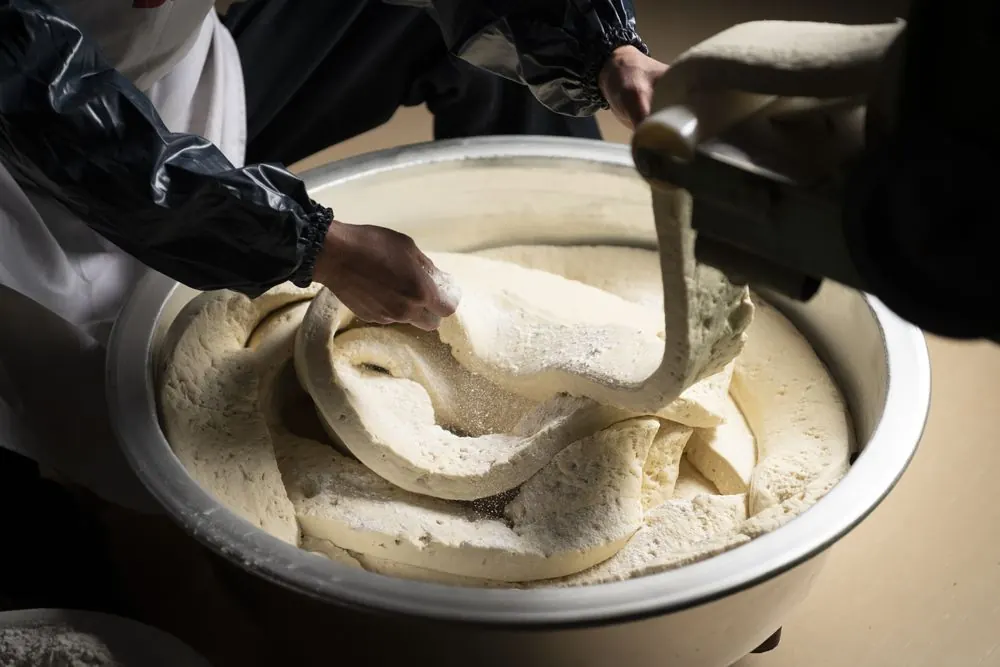
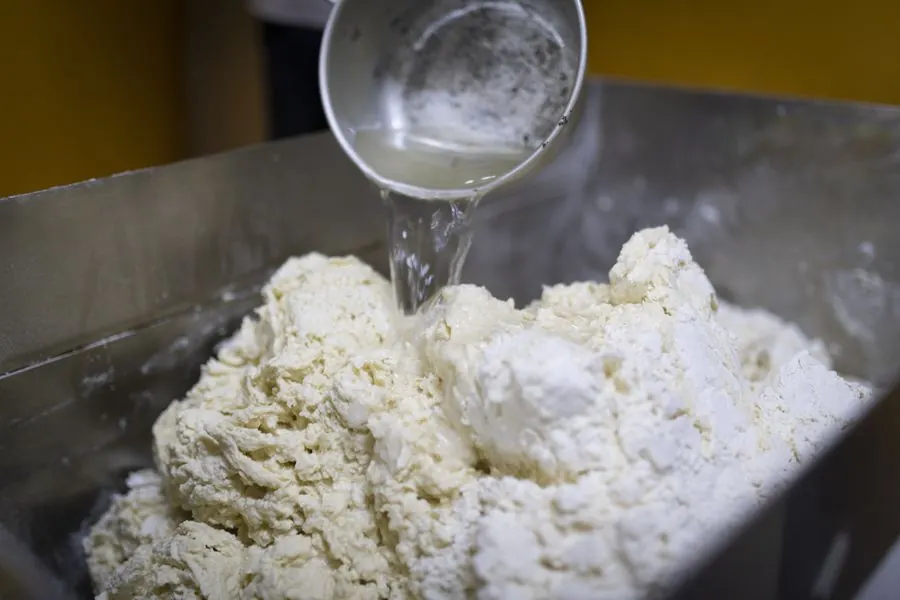
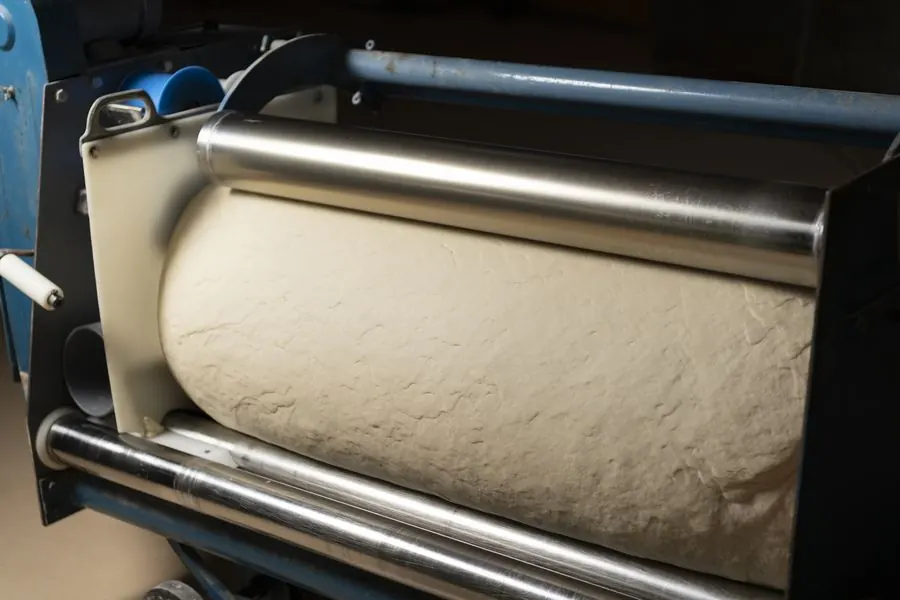
The salt water for kneading is adjusted every morning to the temperature and humidity. No two days are alike, so experience and instinct matter.


A 1754 guide to Japan's specialties praised Awa (Tokushima) somen alongside the famous Miwa somen. Handa somen is said to have begun as a home and side craft by the Yoshino River.
Cold winds from the Shikoku mountains and the clear Yoshino River made this land ideal for noodle-making — a tradition that continues today.
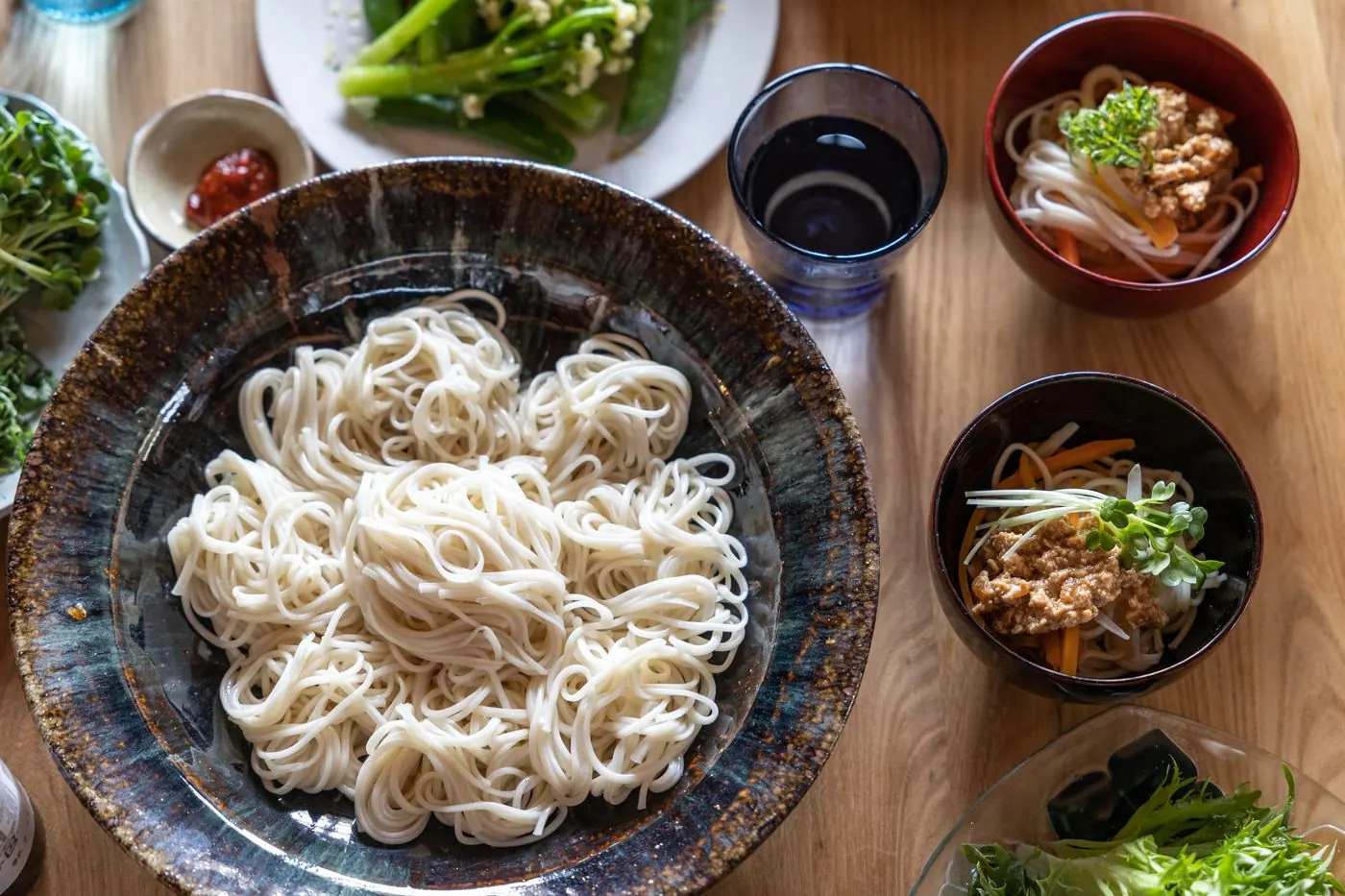
Handa somen is known for its thickness and firm chew. By JAS standards its width would be classed as hiyamugi, but thanks to its long tradition it is specially allowed to be called somen.
One theory says Yoshino River boatmen made it thick for themselves — quick to make and filling — rather than for sale.
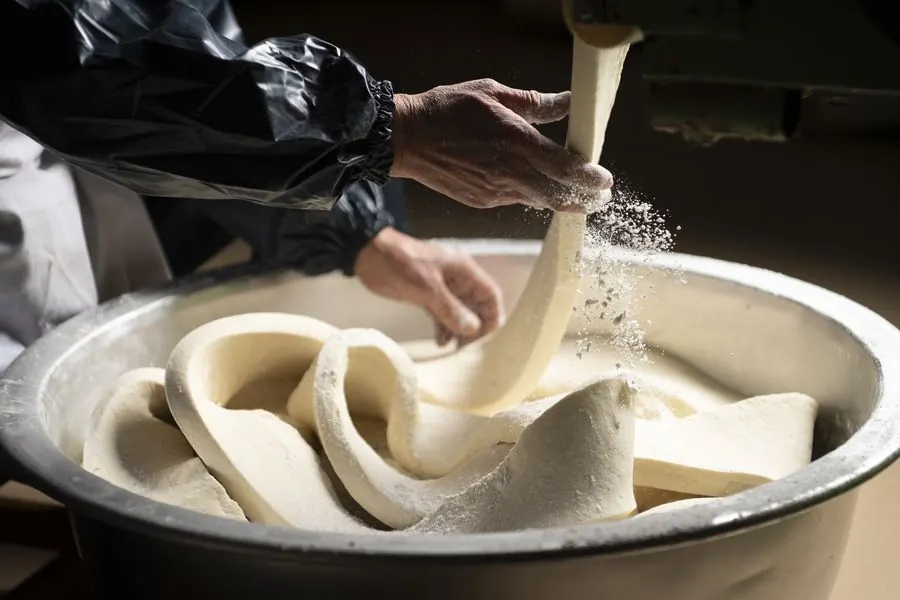
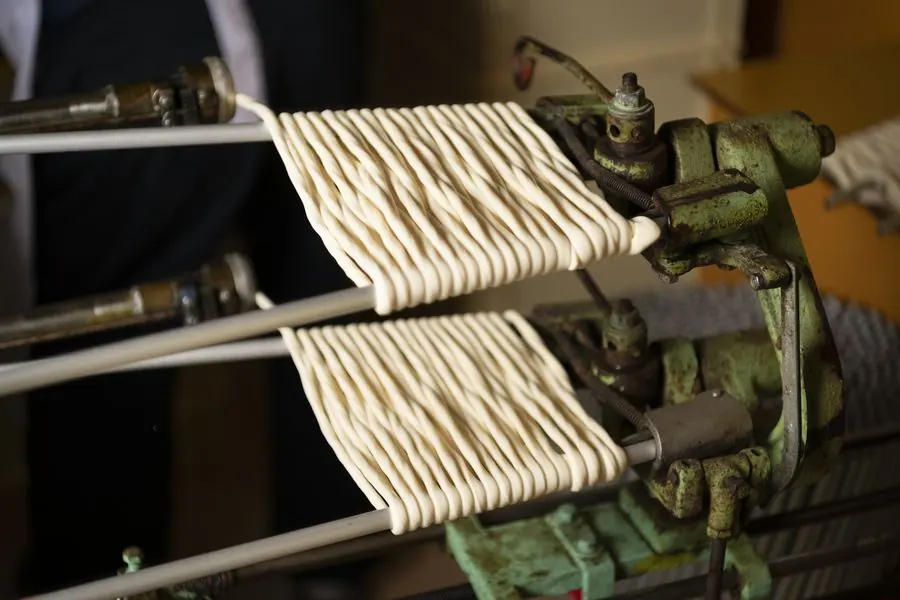
Machines alone can't create this texture. Handa hand-stretching relies on the hands and eyes of artisans who work with the noodles every day.
The salt water for kneading is adjusted every morning to the temperature and humidity. No two days are alike, so experience and instinct matter.
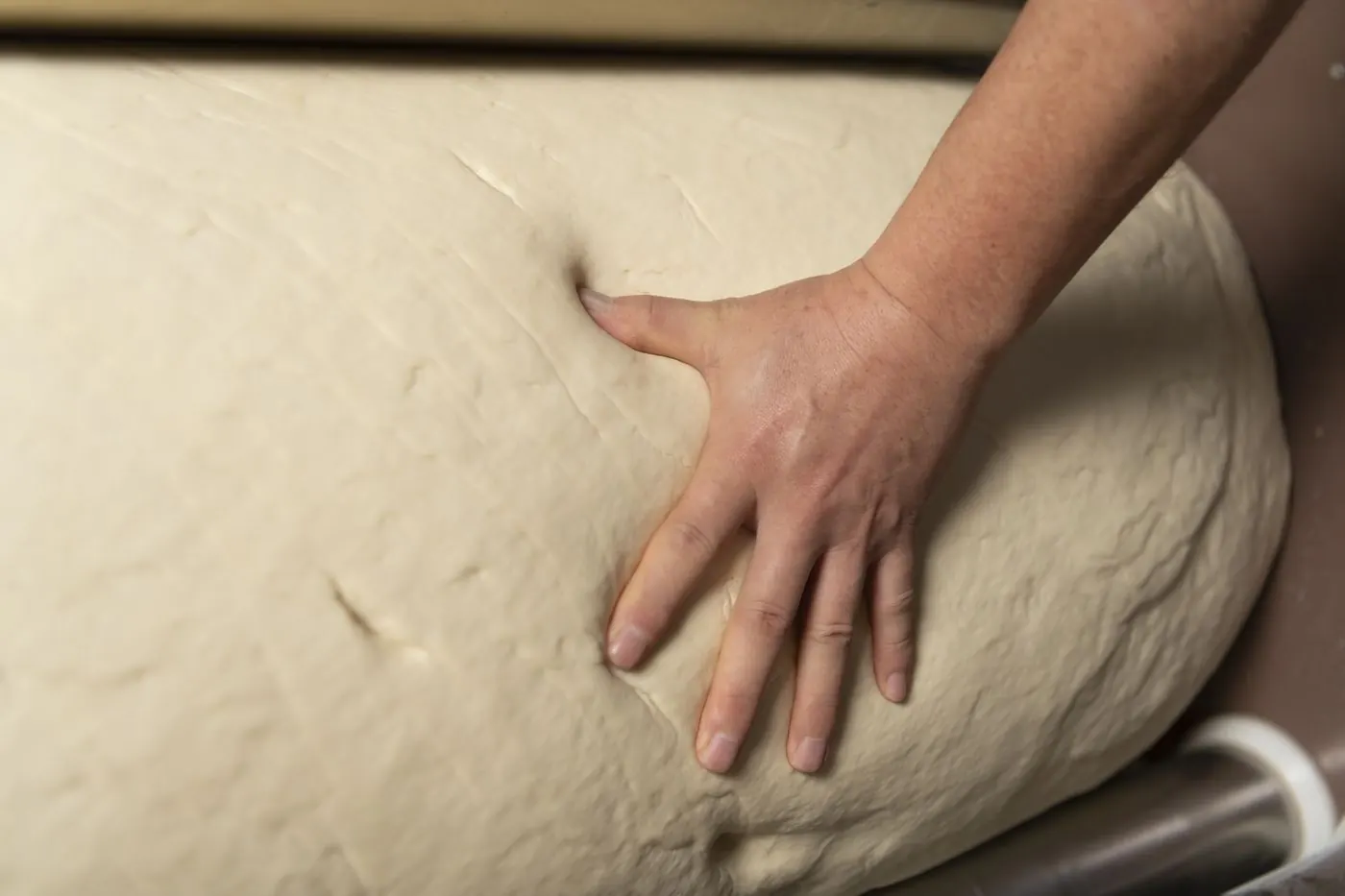
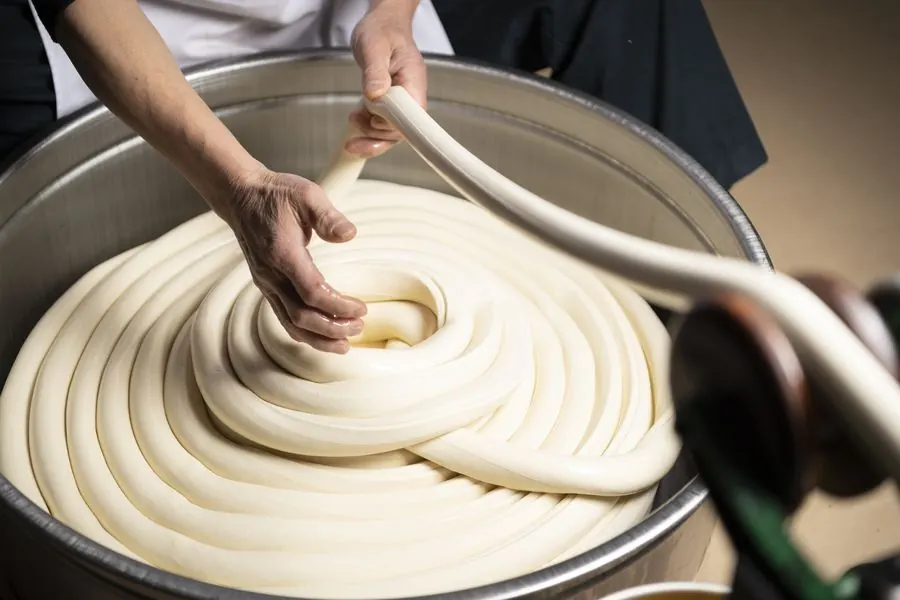
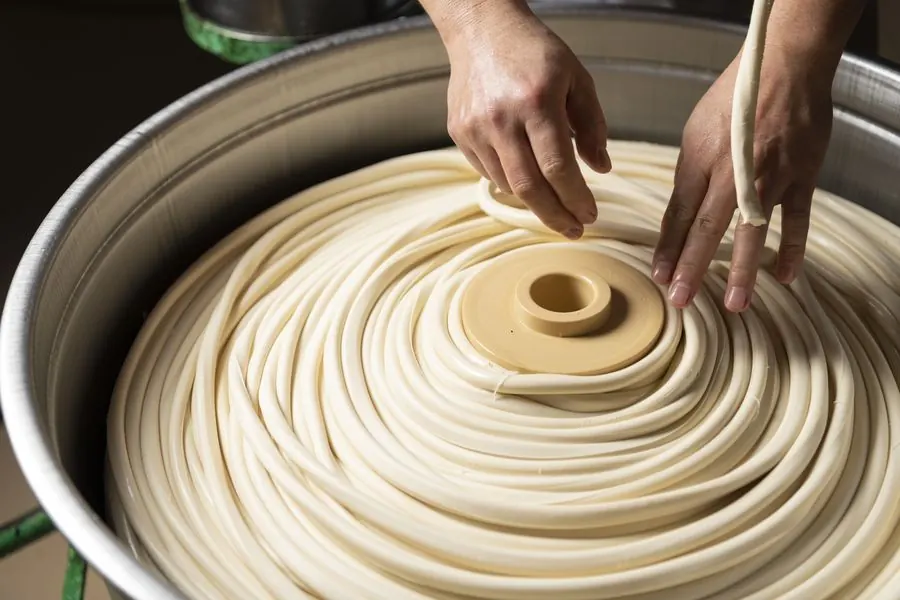
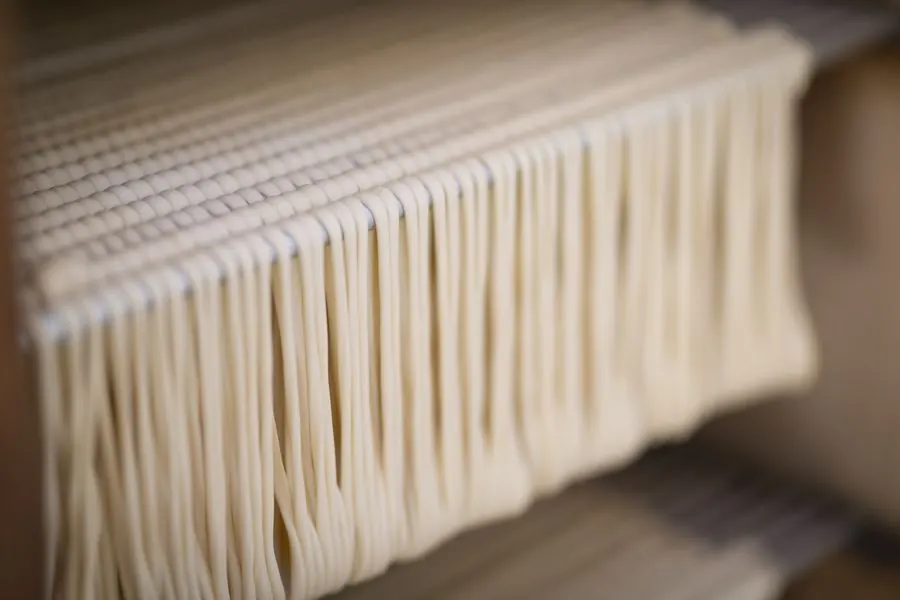
Instead of thinning the dough all at once, we repeat resting and stretching over two days. That's what gives the noodles their firm chew that holds up after boiling.
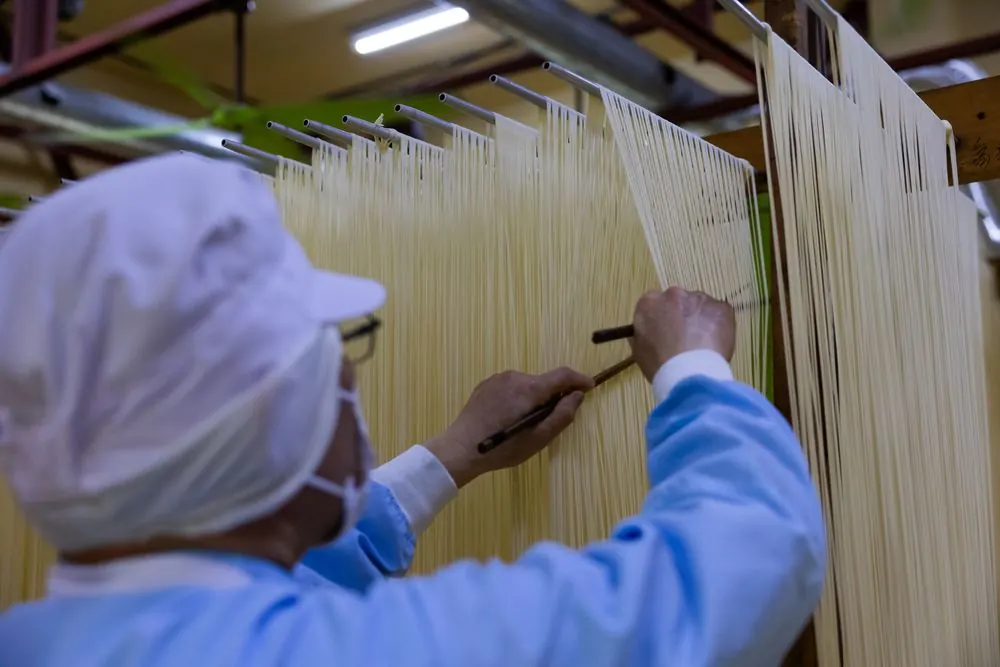
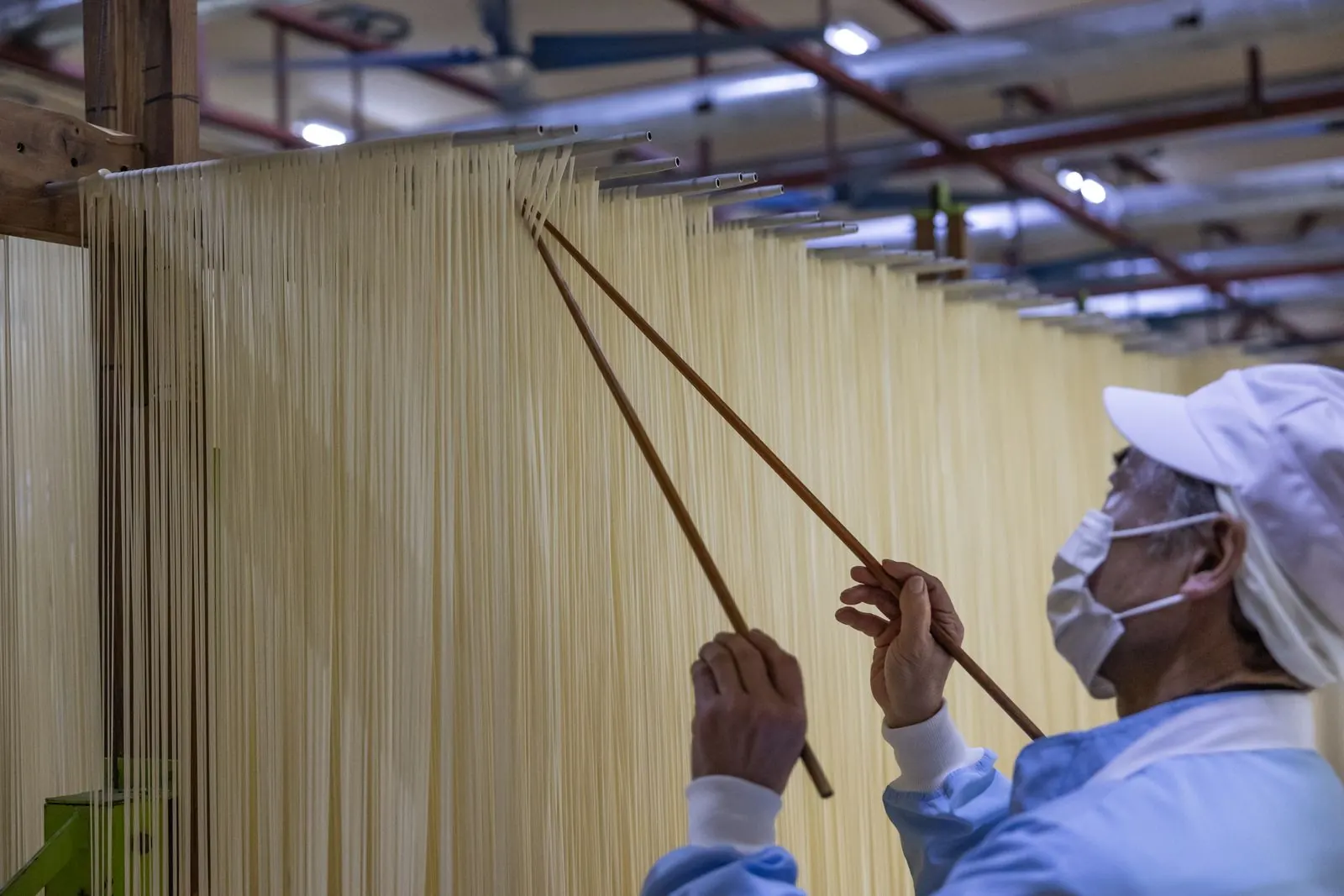
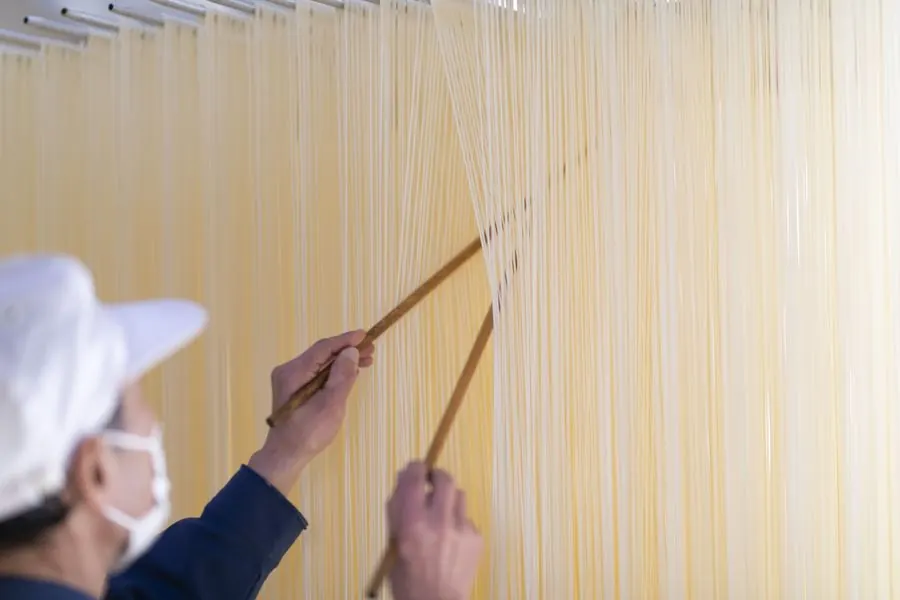
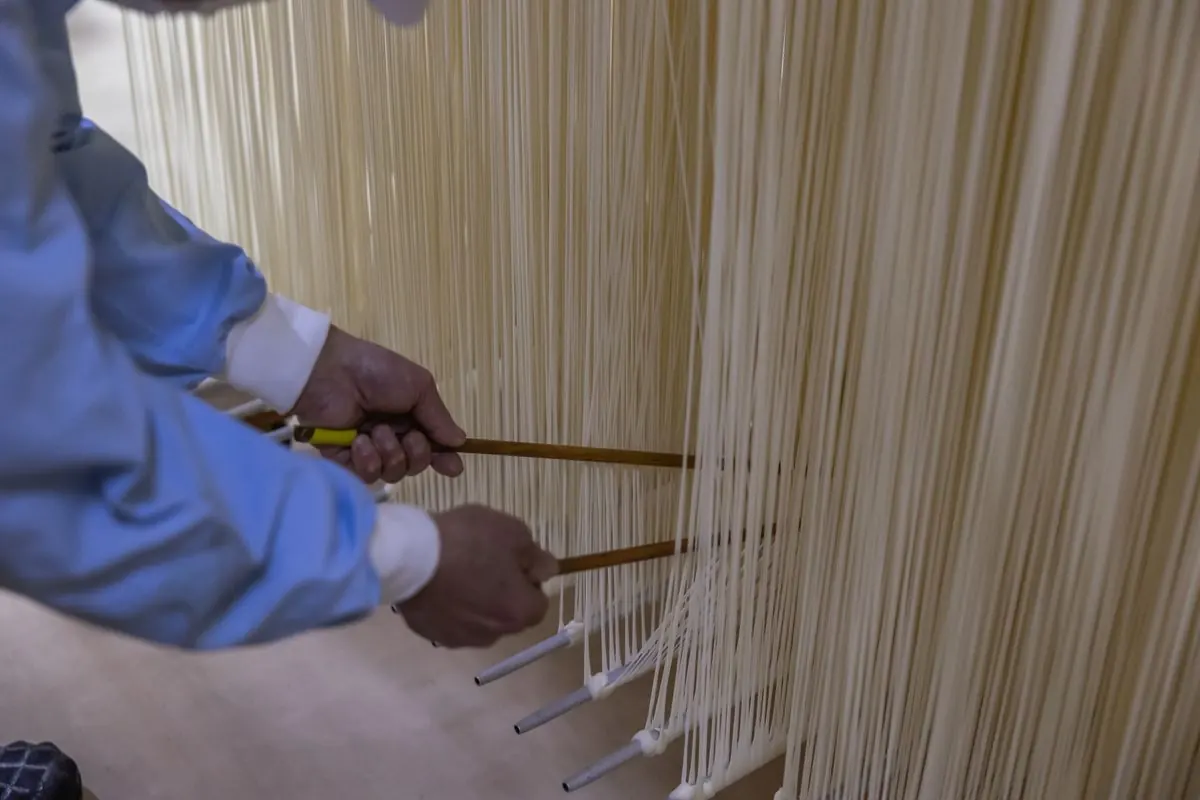
Before drying, artisans slide in bamboo chopsticks to separate every strand — work no machine can do.
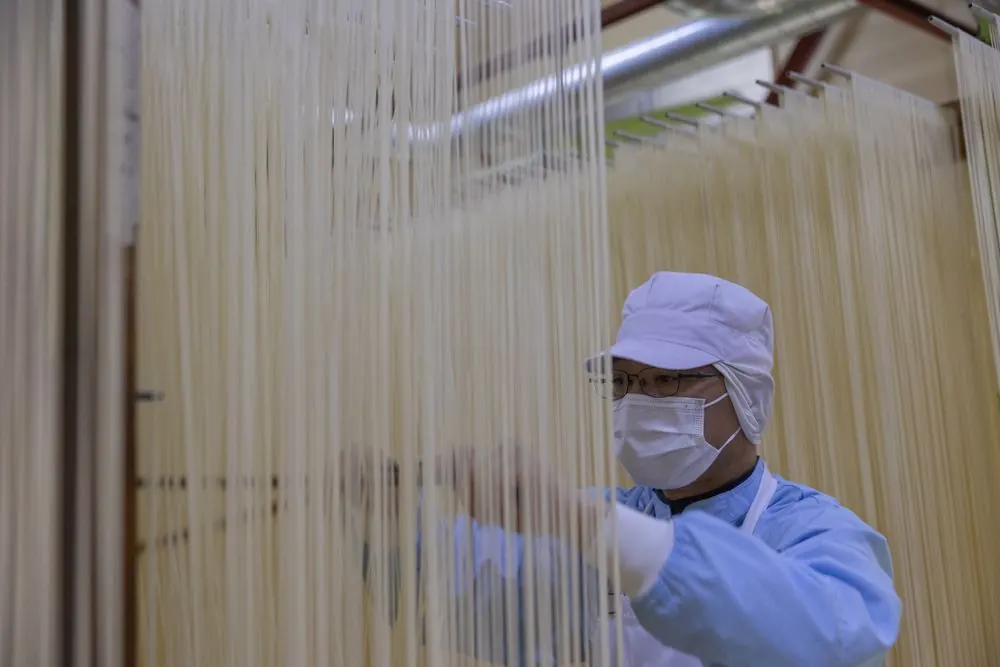
Artisans with more than 31 years in Handa somen check the feel of the dough and the tension of the noodles every day.
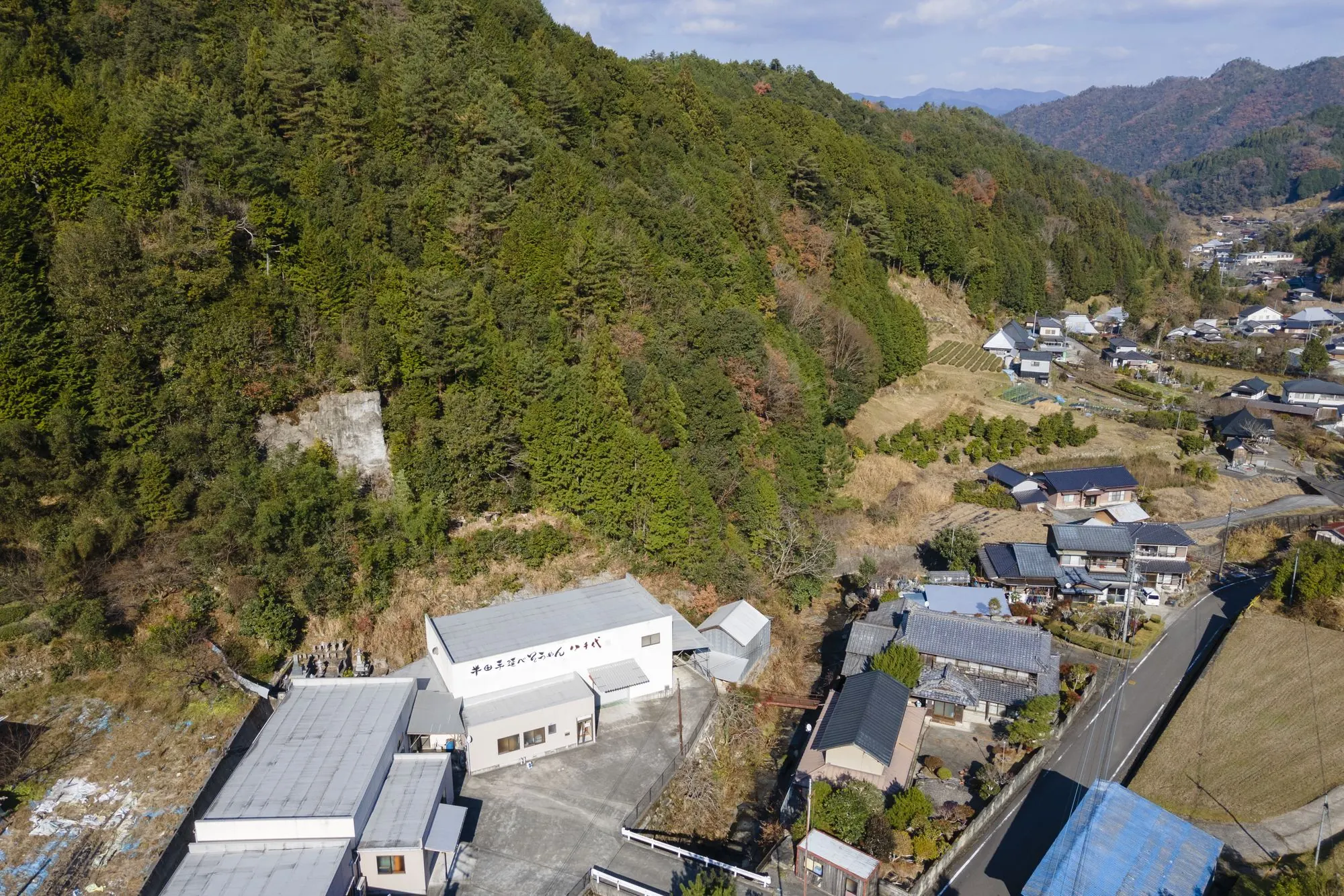
Our factory sits in Handa, Tsurugi town, at the foot of Mt. Tsurugi, the second-highest peak in Shikoku.
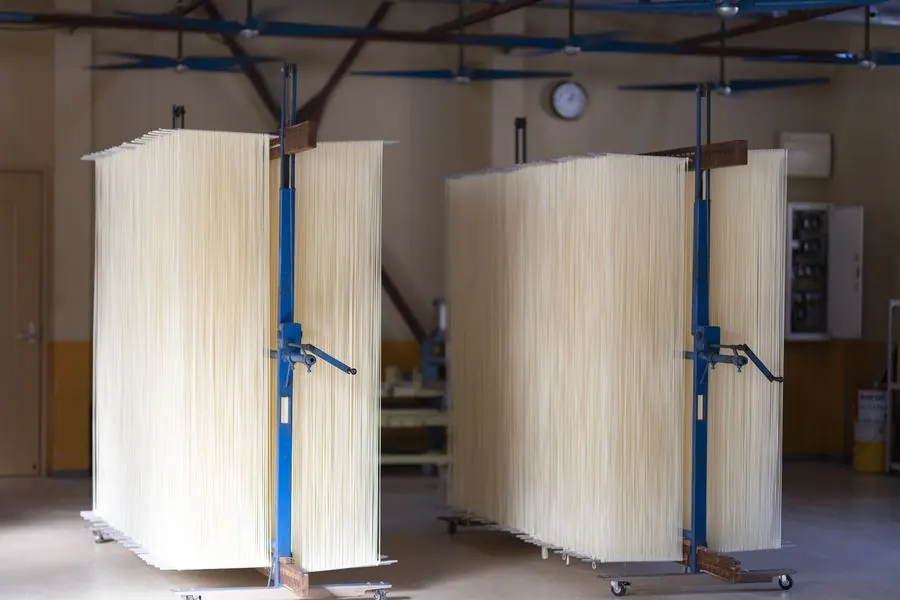
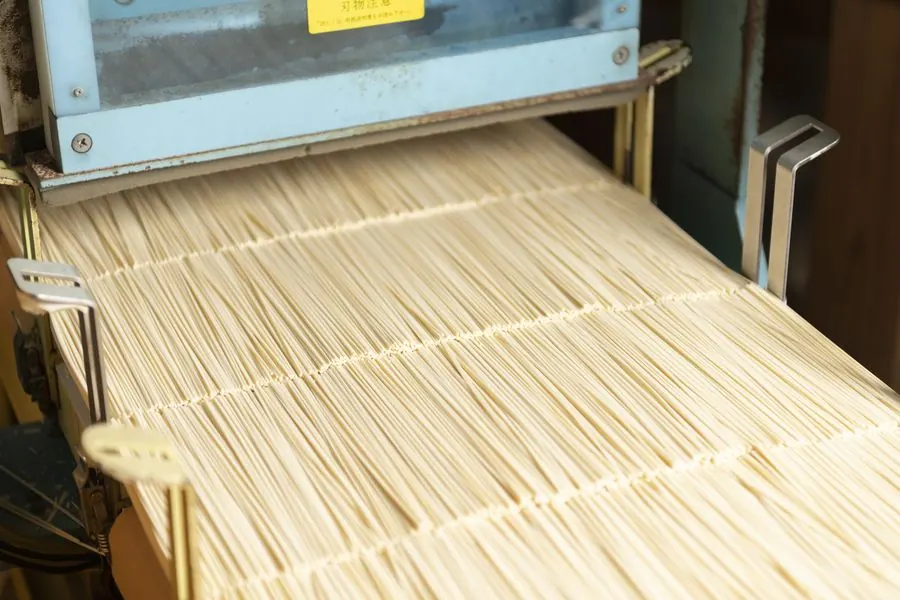
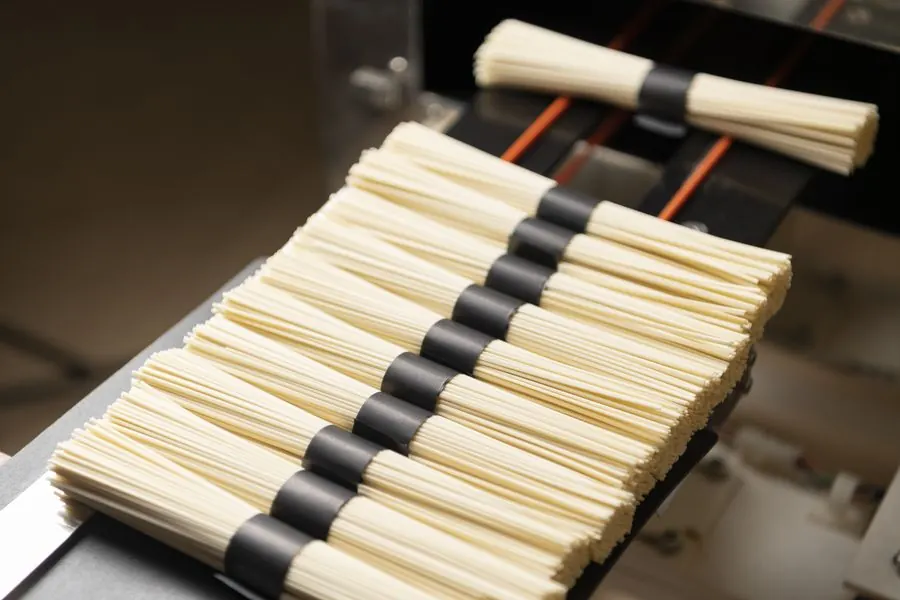
From kneading to bundling takes about two days, with artisans adjusting each step to the weather.
Try the chopstick-stretching step, taste rare fresh somen available only at the factory, and compare it with dried somen. Families welcome. (Japanese booking site)
Book a tour (Jalan)
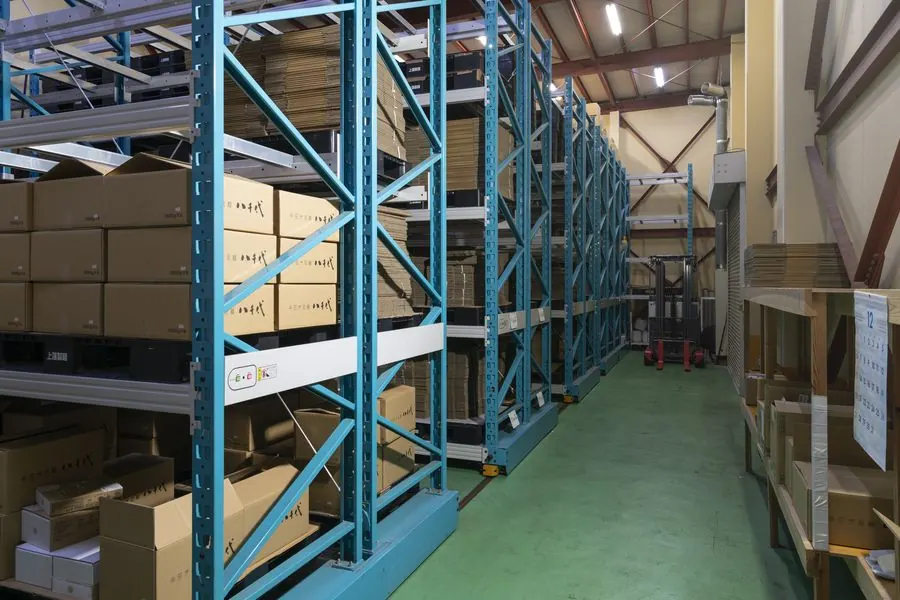
From a 2-pack trial to boxed gift sets.